Message Area
 
 
Murat Demirbas
Homepage
* [[PDF|http://www.cse.buffalo.edu/~demirbas/CV.pdf]]\n* [[PS|http://www.cse.buffalo.edu/~demirbas/CV.ps]]
* [[PDF|http://www.cse.buffalo.edu/~demirbas/research.pdf]]\n* [[PS|http://www.cse.buffalo.edu/~demirbas/research.ps]]
* [[Writing links + quotations| http://www.cse.buffalo.edu/~demirbas/links/Writing.html]]\n* [[Ready Reference Electronic Bookself| http://www.cse.buffalo.edu/~demirbas/links/almanacs.html]]( I saved this page from somewhere else.)\n* [[Computer Departments over the World| http://www.cse.buffalo.edu/~demirbas/links/comdep.html]] ( I saved this page from somewhere else.)
[[In this work| http://www.cse.buffalo.edu/~demirbas/publications/pursuerEvader.pdf]] we present a self-stabilizing program for solving a pursuer-evader problem in sensor networks. The program can be tuned for tracking speed or energy efficiency. In the program, sensor motes close to the evader dynamically maintain a “tracking” tree of depth "R" that is always rooted at the evader. The pursuer, on the other hand, searches the sensor network until it reaches the tracking tree, and then follows the tree to its root in order to catch the evader.\n\n[[Implementation notes| http://www.cse.buffalo.edu/~demirbas/peDemo/]]
[[In this work| http://www.cse.buffalo.edu/~demirbas/publications/floc.pdf]] we present a fast, local clustering service, FLOC, that partitions a\nmulti-hop wireless network into nonoverlapping and approximately\nequal-sized clusters. Each cluster has a clusterhead such that all\nnodes within unit distance and some nodes within distance "m" of the\nclusterhead belong to the cluster. We show that, by asserting a\nstretch factor "m >= 2", FLOC achieves locality of clustering and\nfault-local self-stabilization: effects of cluster formation and\nfaults/changes at any part of the network are contained within at most\n"m+1" units.\n\nThrough simulations and experiments with actual deployments, we\nanalyze the tradeoffs between clustering time and the quality of clustering,\nand suggest suitable parameters for FLOC to achieve a fast completion\ntime without compromising the quality of the resulting clustering.\n\n[[Implementation notes| http://www.cse.buffalo.edu/%7Emurat/floc/]]
[[In this work| http://www.cse.buffalo.edu/~demirbas/publications/stalk.pdf]], we introduce the concept of hierarchy-based fault-local stabilization and a novel self-healing/fault-containment technique and apply them in Stalk. Stalk is an algorithm for tracking in sensor networks that maintains a data structure on top of an underlying hierarchical partitioning of the network. Starting from an arbitrarily corrupted state, Stalk satisfies its specification within time and communication cost proportional to the size of the faulty region, defined in terms of levels of the hierarchy where faults have occurred. This local stabilization is achieved by slowing propagation of information as the levels of the hierarchy underlying Stalk increase, enabling more recent information propagated by lower levels to override misinformation at higher levels before the misinformation is propagated more than a constant number of levels. \nIn addition, this stabilization is achieved without reducing the efficiency or availability of the data structure when faults don't occur: 1) Operations to find the mobile object distance d away take O(d) time and communication to complete, 2) Updates to the tracking structure after the object has moved a total of d distance take O(d*logd) amortized time and communication to complete, 3) The tracked object may relocate without waiting for Stalk to complete updates resulting from prior moves, and 4) The mobile object can move while a find is in progress.
[[In this work| http://www.cse.ohio-state.edu/siefast/nest/nest_webpage/ALineInTheSand.html]], we study the application of sensor networks to the intrusion detection problem and the related problems of classifying and tracking targets. Our approach is based on a dense, distributed, wireless network of multi-modal resource-poor sensors combined into loosely coherent sensor arrays that perform in situ detection, estimation, compression, and exfiltration. We ground our study in the context of a security scenario called "A Line in the Sand" and accordingly define the target, system, environment, and fault models. Based on the performance requirements of the scenario and the sensing, communication, energy, and computation ability of the sensor network, we explore the design space of sensors, signal processing algorithms, communications, networking, and middleware services. We introduce the influence field, which can be estimated from a network of binary sensors, as the basis for a novel classifier.\n\nA contribution of our work is that we do not assume a reliable network; on the contrary, we quantitatively analyze the effects of network unreliability on application performance. Our work includes multiple experimental deployments of over 90 sensors nodes at Mac Dill Air Force Base in Tampa, Florida, as well as other field experiments of comparable scale. Based on these experiences, we identify a set of key lessons and articulate a few of the challenges facing extreme scaling to tens or hundreds of thousands of sensor nodes.
201 Bell Hall, Buffalo, NY, 14260, USA\nEmail: demirbas@cse.buffalo.edu
[[Research Summary]] [[Projects]] [[Publications]] [[Teaching]] [[UBiComp Lab]]\n[[CV]] [[Research Statement]] [[Contact Info]]\n[[Presentations]] [[Pictures]] [[Misc]]
Research in system stabilization has traditionally relied on the availability of a complete system implementation. As such, it would appear that the scalability and reusability of stabilization is limited in practice. To redress this perception, in this work, we show for the first time that system stabilization may be designed knowing only the system specification but not the system implementation.\n\nWe refer to stabilization designed thus as being “graybox” and identify [[convergence refinements|http://www.cse.buffalo.edu/~demirbas/publications/ConvergenceRefinement.pdf]] and [[local everywhere specifications| http://www.cse.buffalo.edu/~demirbas/publications/GrayboxStabilization.pdf]] as being amenable to design of graybox stabilization.\n\nSee my PhD dissertation, titled [[Scalable design of fault-tolerance for wireless sensor networks|http://www.ohiolink.edu/etd/view.cgi?osu1091466471]], for more information. My dissertation had addressed two orthogonal scalability problems in building dependable sensor network services: (1) the scalability of the cost-overhead of self-healing with respect to the size of the network, and (2) the scalability of the design effort for self-healing with respect to the size of the application software.
# M. Demirbas. [[Scalable design of fault-tolerance for wireless sensor networks |http://www.ohiolink.edu/etd/view.cgi?osu1091466471]] PhD thesis, The Ohio State University, 2004. \n# V. Mittal, M. Demirbas, and A. Arora. [[LOCI: Local Clustering in Large Scale Wireless Networks |http://www.cse.buffalo.edu/~demirbas/publications/LOCI.ps]] Technical Report, OSU-CISRC-2/03--TR07, Ohio State University, February 2003. \n# M. Demirbas. [[Resettable Vector Clocks: A Case Study in Designing Graybox Fault-tolerance| http://www.cse.buffalo.edu/~demirbas/publications/Thesis.ps]] MS Thesis, OSU-CISRC-4/00-TR11, Ohio State University, February 2000. \n# M. Demirbas, A. Arora. [[An Optimal Termination Detection Algorithm for Rings| http://www.cse.buffalo.edu/~demirbas/publications/OTDR.ps]] Technical Report, OSU-CISRC-2/00-TR05, Ohio State University, February 2000. \n
# M. Demirbas, S. Balachandran. __RoBcast: A Singlehop Reliable Broadcast Protocol for Wireless Sensor Networks__ The Sixth International Workshop on Assurance in Distributed Systems and Networks (ADSN2007).\n# M. Demirbas. [[A Transactional Framework for Programming Wireless Sensor/Actor Networks| http://www.cse.buffalo.edu/~demirbas/publications/ftdcs.pdf]] Future Trends of Distributed Computing Systems (FTDCS), March 2007.\n# T. Herman and M. Demirbas. __Position paper: High-Confidence Software Platforms for Cyber-Physical Systems__ High-Confidence Software Platforms for Cyber-Physical Systems (HCSP-CPS) Workshop, November 2006.\n# M. Demirbas and M. Hussain. __A MAC Layer Protocol for Priority-based Reliable Broadcast in Wireless Ad Hoc Networks__ IEEE International Symposium on a World of Wireless, Mobile and Multimedia Networks (WOWMOM), Buffalo, NY, pages 447-449, June 2006.\n# M. Demirbas and Y.W. Song. [[ An RSSI-based Scheme for Sybil Attack Detection in Wireless Sensor Networks| http://www.cse.buffalo.edu/~demirbas/publications/sybil.pdf]]\nAdvanced EXPerimental activities ON WIRELESS networks and systems (EXPONWIRELESS ) Workshop (as part of WOWMOM 2006), Buffalo, NY, pages 564-570, June 2006.\n# M. Demirbas, K.Y. Chow, and C.S. Wan [[INSIGHT: Internet-Sensor Integration for Habitat Monitoring |http://www.cse.buffalo.edu/~demirbas/publications/insight.pdf]]\nAdvanced EXPerimental activities ON WIRELESS networks and systems (EXPONWIRELESS) Workshop (as part of WOWMOM 2006), Buffalo, NY, pages 553-558, June 2006.\n# G. Chockler, M. Demirbas, S. Gilbert, and C. Newport.[[A Middleware Framework for Robust Applications in Wireless Ad Hoc Networks |http://www.cse.buffalo.edu/~demirbas/publications/allerton.ps]]\nForty-third Annual Allerton Conference on Communication, Control, and Computing, September 2005.\n# G. Chockler, M. Demirbas, S. Gilbert, N. Lynch, C. Newport, and T. Nolte. [[Reconciling the Theory and Practice of (Un)Reliable Wireless Broadcast |http://www.cse.buffalo.edu/~demirbas/publications/]] International Workshop on Assurance in Distributed Systems and Networks, pages 42--48, June 2005.\n# M. Demirbas, A. Arora, T. Nolte, and N. Lynch. __Brief announcement: STALK: A Self-Stabilizing Hierarchical Tracking Service for Sensor Networks__ ACM Symposium on Principles of Distributed Computing (PODC), page 378, July 2004.\n# M. Demirbas, A. Arora, and V. Mittal. __FLOC: A Fast Local Clustering Service for Wireless Sensor Networks__ Workshop on Dependability Issues in Wireless Ad Hoc Networks and Sensor Networks (DIWANS/DSN), pages, June 2004.
[[Research Summary]] [[Projects]] [[Journal publications]] [[Conference publications]] [[Under submission]] [[Workshop publications]]
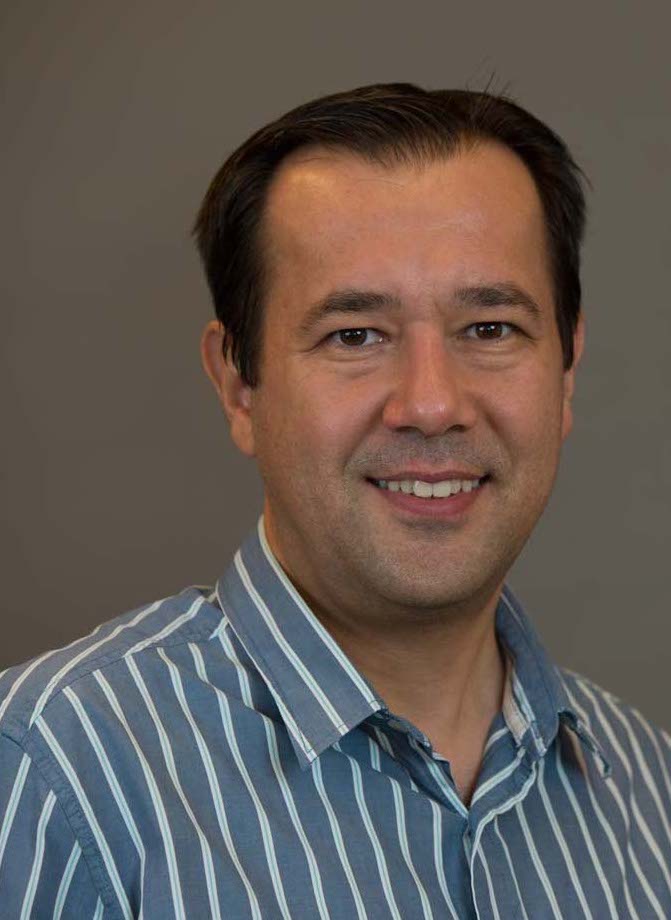
[[Pictures|http://www.cse.buffalo.edu/~demirbas/pics/index.html]]\n[img[http://www.cse.buffalo.edu/~demirbas/pics/murat.jpg]]
I taught [[CSE 646: Wireless Sensor Networks| http://www.cse.buffalo.edu/~demirbas/CSE646.html]] in Fall 2006 and Fall 2005.\n\nThis class provides a hands-on introduction to wireless sensor networking. We will start with a tutorial on programming wireless sensor network applications in TinyOS, and then delve into exploring protocols for\n * Link layer,\n * MAC layer,\n * Topology control,\n * Localization,\n * Routing,\n * Querying, and\n * Network reprogramming.\n\nEach student completes a project and present a demo and poster about the project. (The project can be used for satisfying the project requirement of the MS degree.)\n\n----\n----\n\nI thought [[CSE 719: Design & Implementation of Self-Healing Protocols for Wireless Sensor Networks| http://www.cse.buffalo.edu/~demirbas/CSE719.html]] in Spring 2007 and Spring 2006.\n\nIn this course we study the fundamental concepts and techniques for the design and verification of distributed and self-healing programs. In addition, we also put special emphasis on system building issues, such as implementing and deploying several distributed and self-healing programs in wireless sensor networks (WSN) on the Mica2 and Tmote platforms.\n\nTopics covered include:\n# Concurrency problems in distributed systems: difficulty of maintaining consistent states, impossibility of consensus under undetectable message loss\n# Logics for distributed programs: safety and progress properties, UNITY style temporal logic, proofs of program properties\n# Self-stabilization: mechanisms for self-stabilization, soft-state protocols, proof techniques for self-stabilization\n# Systems issues in WSN programming: holistic system design, energy-efficiency techniques, collision and contention avoidance, systems issues in deployment of WSN applications, programming methodologies for simplifying WSN programming
[[Journal publications]]\n[[Conference publications]]\n[[Workshop publications]]\n[[Other publications]]\n\nAlso see the [[plain html version|http://www.cse.buffalo.edu/~demirbas/publications.html]].
This is not a complete list. I try to update this occasionally.\n\n* [[Distributed Quad Trees for Efficient Querying in Wireless Sensor Networks| http://www.cse.buffalo.edu/~demirbas/presentations/dqt.ppt]] IEEE International Conference on Communication (ICC), June 2007.\n* [[Robcast: A Singlehop Reliable Broadcast Protocol for Wireless Sensor Networks| http://www.cse.buffalo.edu/~demirbas/presentations/robcast.ppt]] The Sixth International Workshop on Assurance in Distributed Systems and Networks, June 2007.\n* [[Data Salmon: A Greedy Mobile Basestation Protocol for Efficient Data Collection in Wireless Sensor Networks| http://www.cse.buffalo.edu/~demirbas/presentations/dataSalmon.ppt]] DCOSS, June 2007.\n* [[A Transactional Framework for Programming Wireless Sensor/Actor Networks| http://www.cse.buffalo.edu/~demirbas/presentations/Ftdcs.ppt]] \n FTDCS, March 2007.\n*[[Wireless Sensor Networks for Monitoring of Next Generation Buildings|http://www.cse.buffalo.edu/~demirbas/presentations/BuildingMonitoring.ppt]] US Japan Workshop on Next Generation Buildings. \n* [[Glance: A Lightweight Querying Service for Wireless Sensor Networks| http://www.cse.buffalo.edu/~demirbas/presentations/Glance.ppt]] \nOPODIS, December 2006.\n* [[A MAC Layer Protocol for Priority-based Reliable Multicast in Wireless Ad Hoc Networks.| http://www.cse.buffalo.edu/~demirbas/presentations/Bsma.ppt]] Broadnets, Oct 2006.\n* [[Short research overview| http://www.cse.buffalo.edu/~demirbas/presentations/ResearchOverview.ppt]] Sept 2006.\n* [[Insight: Internet-Sensor Integration for Habitat Monitoring| http://www.cse.buffalo.edu/~demirbas/presentations/Insight.ppt]] WoWMoM, EXPONWIRELESS, June 2006. \n* [[An RSSI-based Scheme for Sybil Attack Detection in Wireless Sensor Networks| http://www.cse.buffalo.edu/~demirbas/presentations/Sybil.ppt]] WoWMoM, EXPONWIRELESS, June 2006. \n* [[Scalable Tracking & Querying for Wireless Sensor Networks| http://www.cse.buffalo.edu/~demirbas/presentations/ScalableTracking.ppt]]\nBilkent and METU universities, Ankara, Turkey, May 2006.\n* [[Consensus and Collision Detectors in Wireless Sensor Networks| http://www.cse.buffalo.edu/~demirbas/presentations/WSNconsensus.ppt]]\n* [[Peer-to-peer Spatial Queries in Sensor Networks| http://www.cse.buffalo.edu/~demirbas/presentations/peer-tree.ppt]] Linkopings, Sweden, September 2003.\n* [[A toy tracking demo that uses sensor networks| http://www.cse.buffalo.edu/~demirbas/peDemo]] June 2002.\n* [[Convergence Refinements| http://www.cse.buffalo.edu/~demirbas/presentations/ConvRef9.ppt]], Vienna, Austria, July 2002.\n* [[Graybox Stabilization| http://www.cse.buffalo.edu/~demirbas/presentations/GrayboxStabilization.ppt]] Goteburg, Sweeden, July 2001.\n* [[A survey of Rely-Guarantee Approaches in Compositional Verification| http://www.cse.buffalo.edu/~demirbas/presentations/RG.ppt]]\n* [[Optimal Termination Detection on Rings| http://www.cse.buffalo.edu/~demirbas/presentations/OTDonRings.ppt]]\n
I lead the [[UBiComp Lab]]: "University at Buffalo Ubiquitous Computing Lab". UBiComp is located at Furnas 210. \n\nWe have four PhD students in our lab currently:\n* [[Murat Ali Bayir|http://www.cse.buffalo.edu/~mbayir]]\n* [[Muzammil Hussain| http://www.cse.buffalo.edu/~hussain]] \n* [[Onur Soysal| http://www.cse.buffalo.edu/~osoysal]]\n* [[Xuming Lu| http://www.cse.buffalo.edu/~xuminglu]]\n\nSeveral MS students are also associated with the lab.
!!An In-network Collaboration and Coordination Framework for Wireless Sensor Actor Networks\n\nWhile there have been many efficient point solutions to the in-network\nprocessing problems in wireless sensor networks (WSNs), there has been\nlittle effort to address the underlying root research problem of\ndevising an in-network collaboration and coordination framework that\ncan achieve standardization and integration of in-network processing\nprotocols. The objective of this project is to design and implement\nsuch a framework.\n\nThis framework introduces a decentralized transactional model that\nenables a node to update the state of its singlehop neighborhood\nconsistently and atomically. One of the key insights in this\nframework is to observe that singlehop wireless broadcast has many\nuseful features for facilitating collaboration and coordination. By\nexploiting the atomicity and broadcast properties of singlehop\nwireless communication, the framework provides a simple/clean\nabstraction and yet manages to retain the efficiency of execution.\nMoreover, this project also investigates the practical uses of\nreceiver-side collision detection in singlehop collaborative feedback\ncollection in WSNs.\n\nBy addressing the communication and concurrent execution challenges\nunder the hood of its simple abstractions, the framework will provide\na platform for developing and deploying distributed control\napplications as well as WSN in-network processing protocols. As such,\nthis framework will be useful for multi-robot cooperative control\napplications and WSN-robotics integration for distributed sensing.\nMore specifically, the framework will be demonstrated by developing a\ndistributed multiple-pursuer/multiple-evader tracking application in\nWSNs. The proposed career plan integrates research and education\nthrough interdisciplinary coursework development, and dissemination of\nsystems software.
I am an assistant professor at the [[Computer Science and Engineering department| http:\www.cse.buffalo.edu]] of [[SUNY Buffalo| http:\www.buffalo.edu]]. I lead the [[UBiComp Lab]] (University at Buffalo Ubiquitous Computing lab).\n\nMy research interests are mainly in the areas of ''wireless sensor networks'' and ''distributed algorithms''. More specifically, I focus on developing ''robust & resilient'' distributed wireless sensor network (WSN) services and applications. My work spans several layers of the WSN stack:\n*MAC layers for robust single-hop broadcast communication\n*Geometric infrastructures for local & resilient WSN services\n*Programming abstractions for WSN control & collaboration applications\n*Mobility induced resilience\n*Real-world deployments of robust WSN\n*Theory of resilient and self-healing computing\n\n----\n!! NSF-CAREER award, 2008.\n----\nIn Fall 2007, I have taught [[CSE 489/589: Modern Networking Concepts|http://www.cse.buffalo.edu/~demirbas/CSE589.html]], and [[CSE 703: Seminar on Wireless Sensor Networks| http://www.cse.buffalo.edu/~demirbas/CSE703.html]]. I am also teaching [[UE 141|http://www.cse.buffalo.edu/~demirbas/UE141.html]], an undergraduate [[discovery seminar |http://discoveryseminars.buffalo.edu/seminars/index.php]] on wireless sensor networks. \n\nI am teaching [[CSE 646: Wireless Sensor Networks| http://www.cse.buffalo.edu/~demirbas/CSE646.html]] in Spring 2008.
!! Current projects\n* Collision detection and collision-aware WSN services\n* Distributed & geometric structures and algorithms for querying and tracking\n* A transactional programming framework to achieve concurrency-safe programs for real-time control applications (NSF-CAREER)\n* Mobile basestation and WSN protocols for efficient data collection\n* Elvis: In-building personnel tracking and monitoring system\n\n!! Previous projects\n* [[Specification based design of fault-tolerance]]\n* [[Scalable tracking]]\n* [[A line in the sand]]\n* [[Pursuer-evader tracking]]\n* [[Fault-local spatial clustering]]
# M. Demirbas, O. Soysal, M. Hussain, __Transact: A Transactional Programming Framework for Wireless Sensor/Actor Networks.__ Accepted to IPSN, 2008. \n# M. Demirbas, O. Soysal, M. Hussain. __Singlehop Collaborative Feedback Primitives for Wireless Sensor Networks.__ Infocom miniconference 2008. (Infocom acceptance rate is 29% overall including miniconference.)\n# M. Demirbas, O. Soysal, and A. S. Tosun. [[Data Salmon: A Greedy Mobile Basestation Protocol for Efficient Data Collection in Wireless Sensor Networks.|http://www.cse.buffalo.edu/~demirbas/publications/DataSalmon.pdf]] [[IEEE International Conference on Distributed Computing in Sensor Systems (DCOSS)| http://www.dcoss.org/dcoss07/index.php]] June 2007.\n# M. Demirbas and X. Lu. [[Distributed Quad Trees for Efficient Querying in Wireless Sensor Networks.| http://www.cse.buffalo.edu/~demirbas/publications/dqt.pdf]] IEEE International Conference on Communication (ICC), June 2007.\n# V. Kulathumani, A. Arora, M. Demirbas, and M. Sridharan. [[Trail: A Distance Sensitive Network Protocol For Distributed Object Tracking.| http://www.cse.buffalo.edu/~demirbas/publications/trail.pdf]] [[European conference on Wireless Sensor Networks (EWSN)|http://www.dritte.org/ewsn/]], Jan 2007. (acceptance rate = 13%)\n# M. Demirbas, A. Arora, and V. Kulathumani. [[Glance: A Lightweight Querying Service for Wireless Sensor Networks.|http://www.cse.buffalo.edu/~demirbas/publications/glance.pdf]] [[OPODIS'06|http://www.opodis.net/]], pages 242-257, December 2006. (acceptance rate = 13%)\n# M. Demirbas and M. Hussain. [[A MAC Layer Protocol for Priority-based Reliable Multicast in Wireless Ad Hoc Networks.| http://www.cse.buffalo.edu/~demirbas/publications/bema.pdf]] Broadband Wireless Networking Symposium (BroadNets), Oct 2006.\n# G. Chockler, M. Demirbas, S. Gilbert, C. Newport, and T. Nolte. [[Consensus and Collision Detectors in Wireless Ad Hoc Networks.| http://www.cse.buffalo.edu/~demirbas/publications/consensusWSN.pdf]] [[PODC|http://www.podc.org/podc2005/]], pages 197-206, 2005.(acceptance rate=23%)\n# M. Demirbas, A. Arora, T. Nolte, and N. Lynch. [[A Hierarchy-based Fault-local Stabilizing Algorithm for Tracking in Sensor Networks.|http://www.cse.buffalo.edu/~demirbas/publications/stalk.pdf]] 8th International Conference on Principles of Distributed Systems (OPODIS), France, December 2004. ([[project page|http://www.cse.buffalo.edu/~demirbas/track/]])\n# M. Demirbas, A. Arora, V. Mittal, and V. Kulathumani. [[Design and Analysis of a Fast Local Clustering Service for Wireless Sensor Networks.|http://www.cse.buffalo.edu/~demirbas/publications/floc.pdf]] Broadband Wireless Networking Symposium (Broad Nets), San Jose, 2004. ([[project page|http://www.cse.buffalo.edu/~demirbas/floc/]])\n# M. Demirbas and H. Ferhatosmanoglu. [[Peer-to-Peer Spatial Queries in Sensor Networks.|http://www.cse.buffalo.edu/~demirbas/publications/peer-tree.pdf]] The Third IEEE International Conference on Peer -to- Peer Computing, Sweden, September 2003.\n# M. Demirbas, A. Arora, and M. Gouda. [[A Pursuer-Evader Game for Sensor Networks.|http://www.cse.buffalo.edu/~demirbas/publications/pursuerEvader.pdf]] The Sixth Symposium on Self - Stabilizing Systems, San Francisco, June 2003.\n# P. A. G. Sivilotti and M. Demirbas. [[Introducing Middle School Girls to Fault Tolerant Computing. |http://www.cse.buffalo.edu/~demirbas/publications/sigcse03.pdf]] Technical Symposium on Computer Science Education (SIGCSE), Feb 2003.\n# M. Demirbas and A. Arora. [[Convergence Refinement |http://www.cse.buffalo.edu/~demirbas/publications/ConvergenceRefinement.pdf]]\n''Best paper'' at International Conference on Distributed Computing Systems (ICDCS), pages 589--597, July 2002. (acceptance rate=18%)\n# A. Arora, M. Demirbas, and S. S. Kulkarni. [[Graybox Stabilization |http://www.cse.buffalo.edu/~demirbas/publications/GrayboxStabilization.pdf]]\nInternational Conference on Dependable Systems and Networks (ICDSN), pages 389--400, July 2001. (acceptance rate=35%)\n#A. Arora, S. S. Kulkarni, and M. Demirbas [[Resettable Vector Clocks |http://www.cse.buffalo.edu/~demirbas/publications/RVC.ps]]\nACM Symposium on Principles of Distributed Computing (PODC),\npages 269-278, July 2000. (acceptance rate=27%)
# X. Lu, M. Demirbas, __A Lightweight Tracking Framework for Mobile Ad~Hoc Networks.__ submitted to SECON, December 2007.\n# SK Yoon, O. Soysal, M. Demirbas, C. Qiao, __Coordinated Locomotion of Mobile Sensor Networks.__ submitted to SECON, December 2007.\n# TK. Lee, C. Qiao, M. Demirbas, J. Xu. __ABC: A Novel Integrated MAC and Routing Protocol for Wireless Ad Hoc Networks.__ 2007.\n# M. Demirbas, X. Lu, P. Singla. __An In-network Querying Framework for Wireless Sensor Networks.__ Submitted to the Transactions on Parallel and Distributed Systems.\n# V. Kulathumani, A. Arora, M. Demirbas, M. Sridharan. __Trail: A Distance-sensitive Network Service for Distributed Object Tracking.__ Submitted to ACM Transactions on Sensor Networks.\n\n
# A. Arora, et al. [[A Line in the Sand: A Wireless Sensor Network for Target Detection, Classification, and Tracking.| http://www.cse.buffalo.edu/~demirbas/publications/lites.pdf]] Computer Networks ( Elsevier) Volume 46, Issue 5, December 2004, pages 605-634.\n# M. Demirbas, A. Arora, and M. Gouda. [[Pursuer - Evader Tracking in Sensor Networks.| http://www.cse.buffalo.edu/~demirbas/publications/peJournal.pdf]] Sensor Network Operations, chp.9, IEEE Press, May 2006.([[project page|http://www.cse.buffalo.edu/~demirbas/peDemo/]])\n# A. Arora, S. S. Kulkarni, and M. Demirbas. [[Resettable Vector Clocks.| http://www.cse.buffalo.edu/~demirbas/publications/rvcJournal.pdf]] Journal of Parallel and Distributed Computing, Volume 66, Issue 2, February 2006, Pages 221-237\n# M. Demirbas, A. Arora, V. Mittal, V. Kulathumani. [[A Fault -Local Self -Stabilizing Clustering Service for Wireless Ad Hoc Networks.|http://www.cse.buffalo.edu/~demirbas/publications/flocJournal.pdf]] IEEE Transactions on Parallel and Distributed Systems, Special Issue -Localized Communication and Topology Protocols for Ad Hoc Networks, Volume 17, Issue 9, September 2006, Pages 912-923.\n# K. Akkaya, M. Demirbas, and S. Aygun. __The Impact of Data Aggregation on the Performance of Wireless Sensor Networks.__ Journal of Wireless Communications and Mobile Computing, 2008.\n# M. Demirbas, A. Arora, V. Kulathumani. __A Lightweight Querying Service for Wireless Sensor Networks__ To appear at the Theoretical Computer Science Journal, Elsevier, 2008.\n# G. Chockler, M. Demirbas, S. Gilbert, N. Lynch, C. Newport, and T. Nolte. __Consensus and Collision Detectors in Wireless Ad Hoc Networks.__ Accepted to Distributed Computing (Springer), 2008.