Plagiarism
|
Last Update: 5 September 2007
Note:
or
material is highlighted
|
-
I will fail any student on any assignment that I deem to have been
plagiarized in whole or in part.
-
Two occurrences of such plagiarism is grounds for failing the course.
What counts as plagiarism? Roughly:
|
You have plagiarized
any time you copy someone else's words without attribution. |
However, making that rough characterization precise is not easy:
-
If Author uses the word "the", and Student copies that word, has Student
plagiarized Author? Obviously not.
-
If Student copies an entire sentence from Author, puts quotes around the
sentence, and cites the source in the bibliography, that is clearly not
plagiarism.
(In fact, it's exactly what you should do if you want to
quote the Author!)
-
What if Student copies Author's entire essay, puts quotes around it, and
cites the source? (Believe it or not, I once had a student do that!)
-
That's not exactly plagiarism, but it's not much different from handing
in the Author's original article instead of your own report on it.
You'd probably be failed (though not, strictly speaking, for
plagiarism).
-
Equally obviously, copying the entire essay without quotes or
without
citation is plagiarism. (That's happened to me, too.)
Here's a rule of thumb for deciding whether some words you've copied
from Author is going to count as plagiarism:
If a Google search on those words returns Author's document from which
they were copied, and if you
haven't quoted or cited it correctly, then it's probably plagiarism.
|
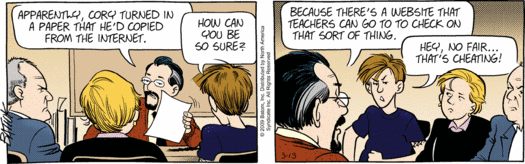
(This, by the way, is how I often catch plagiarizers!)
For more information on plagiarism, link to: